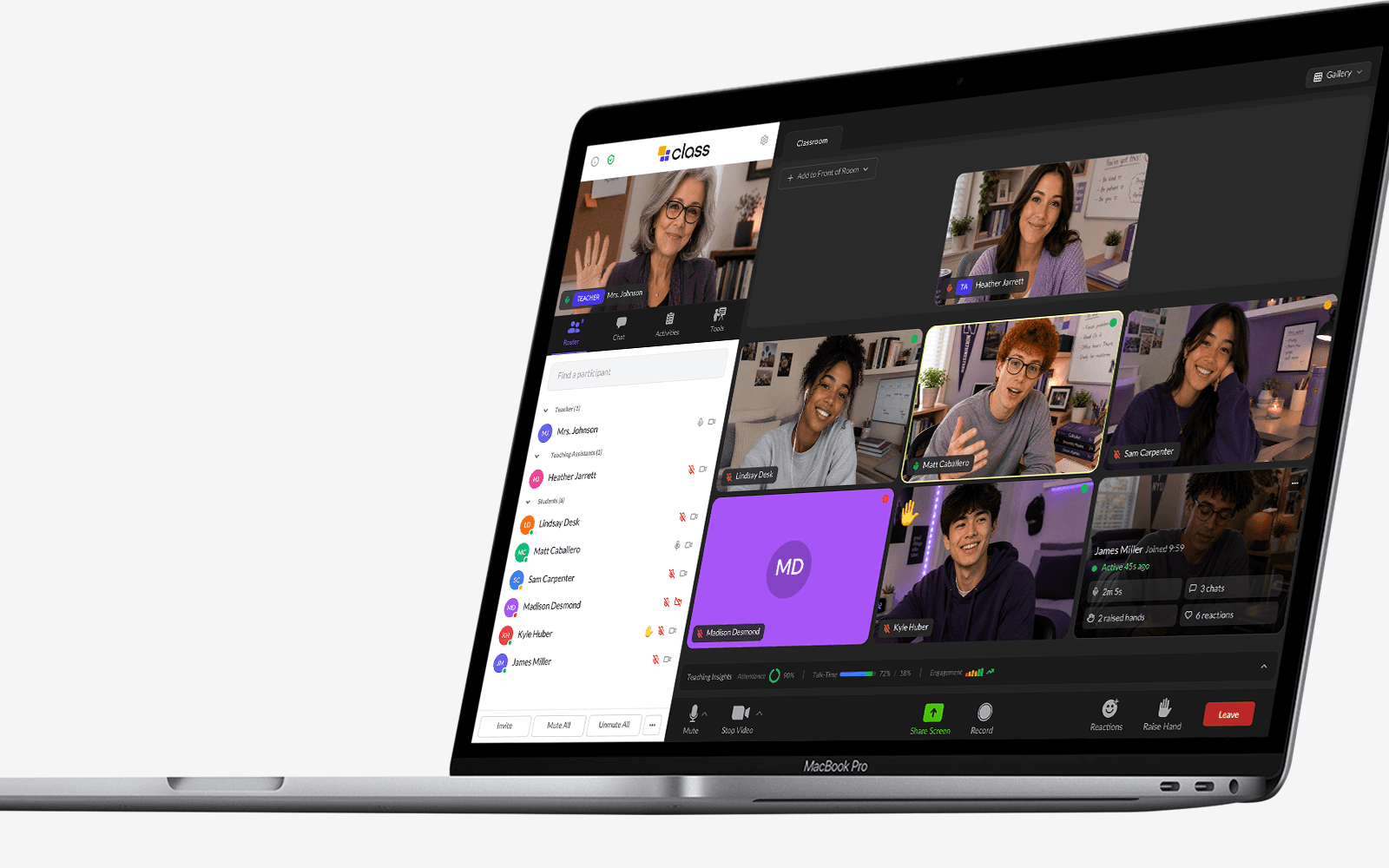
A fragmented federal enterprise insurance system, rebuilt to work
FEMA
I helped modernize FEMA’s enterprise flood insurance platform by introducing shared structure across legacy systems, improving usability, reducing task time, and making future change easier to scale.
Some details have been modified to protect confidentiality.
↓
Did you know? Just six inches of moving floodwater can knock over an adult. One foot can move a car.
Background
Floods are the most common and costly natural disaster in the U.S., and the federal program built to respond to them had become difficult to navigate, scale, and trust.
FEMA's National Flood Insurance Program (NFIP) is the largest single-line insurance program in the U.S., providing $1.3 trillion in coverage to approximately 5 million policyholders across homes, businesses, and communities. At this scale, even small inefficiencies create serious downstream impact.
Following major disaster payouts, the program carries over $20 billion in Treasury debt. Yet legacy infrastructure has continued to slow enrollment, claims processing, and reporting, creating friction inside a program with significant responsibility to the public it serves. This gave me the opportunity to help shape product decisions aimed at improving clarity, trust, and operational resilience.
Role
UI/UX Designer (1 of 2)
Focus
Enterprise UX, legacy modernization, IA, accessibility, design system
Partners
PMs, engineering, program owners, federal stakeholders
Impact
81 SUS, 26% reduction in task time, #1 Agile program across DHS
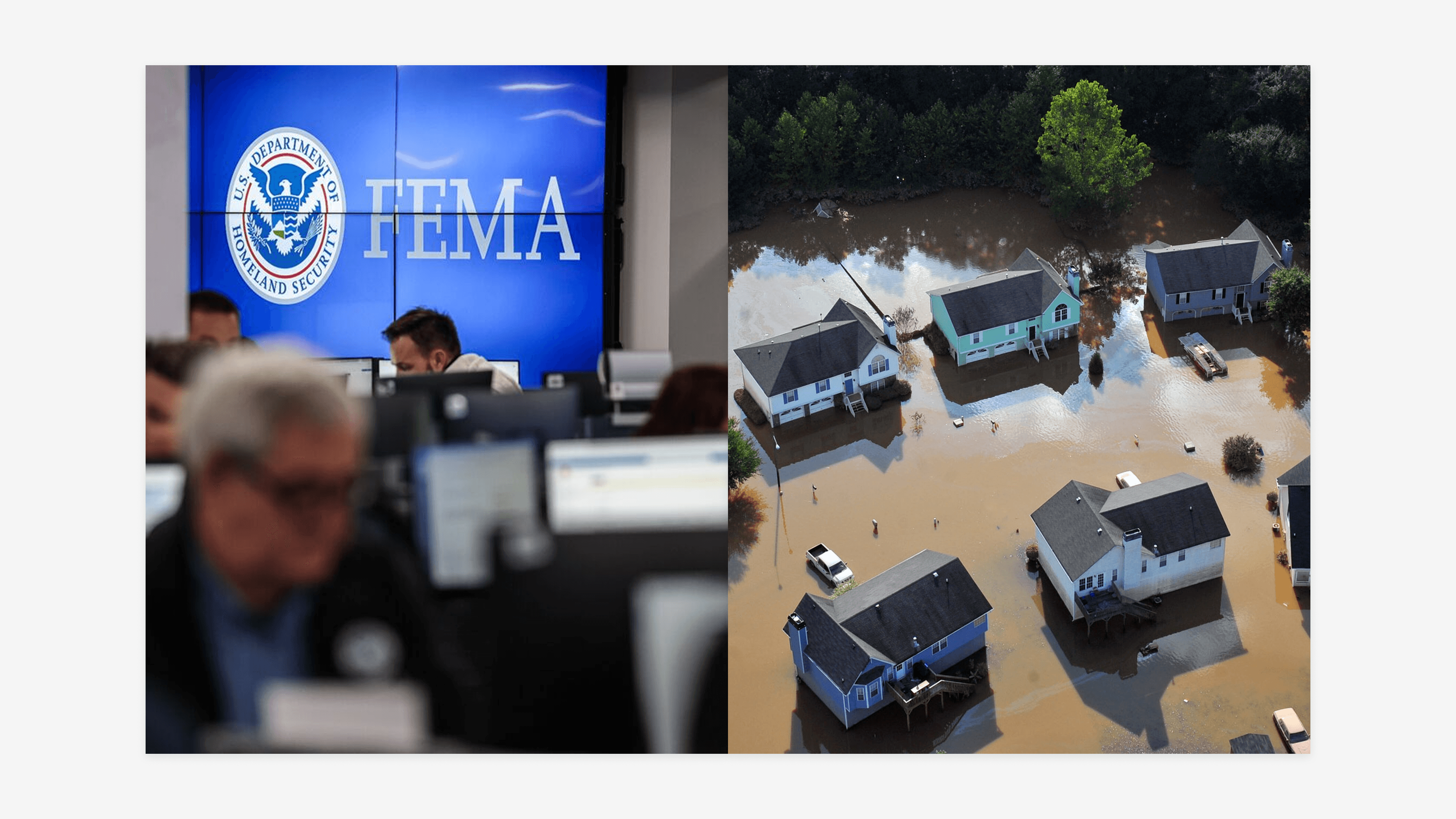
At FEMA’s scale, operational friction was not abstract. It directly shaped how quickly people could recover after flood events.
Challenge
The interfaces looked like the main problem, but underneath was an ecosystem of disconnected systems, inconsistent logic, and no clear path for users who didn't already know the way.
FEMA staff, commercial insurers, and state and local agencies relied on roughly a dozen separate platforms, many decades old, with inconsistent data structures and no shared entry point. Users had to manually assemble their own workflow across policy, reporting, claims, and mapping tools. What looked like a UI problem was really a systems problem: too much depended on institutional knowledge that couldn't scale.
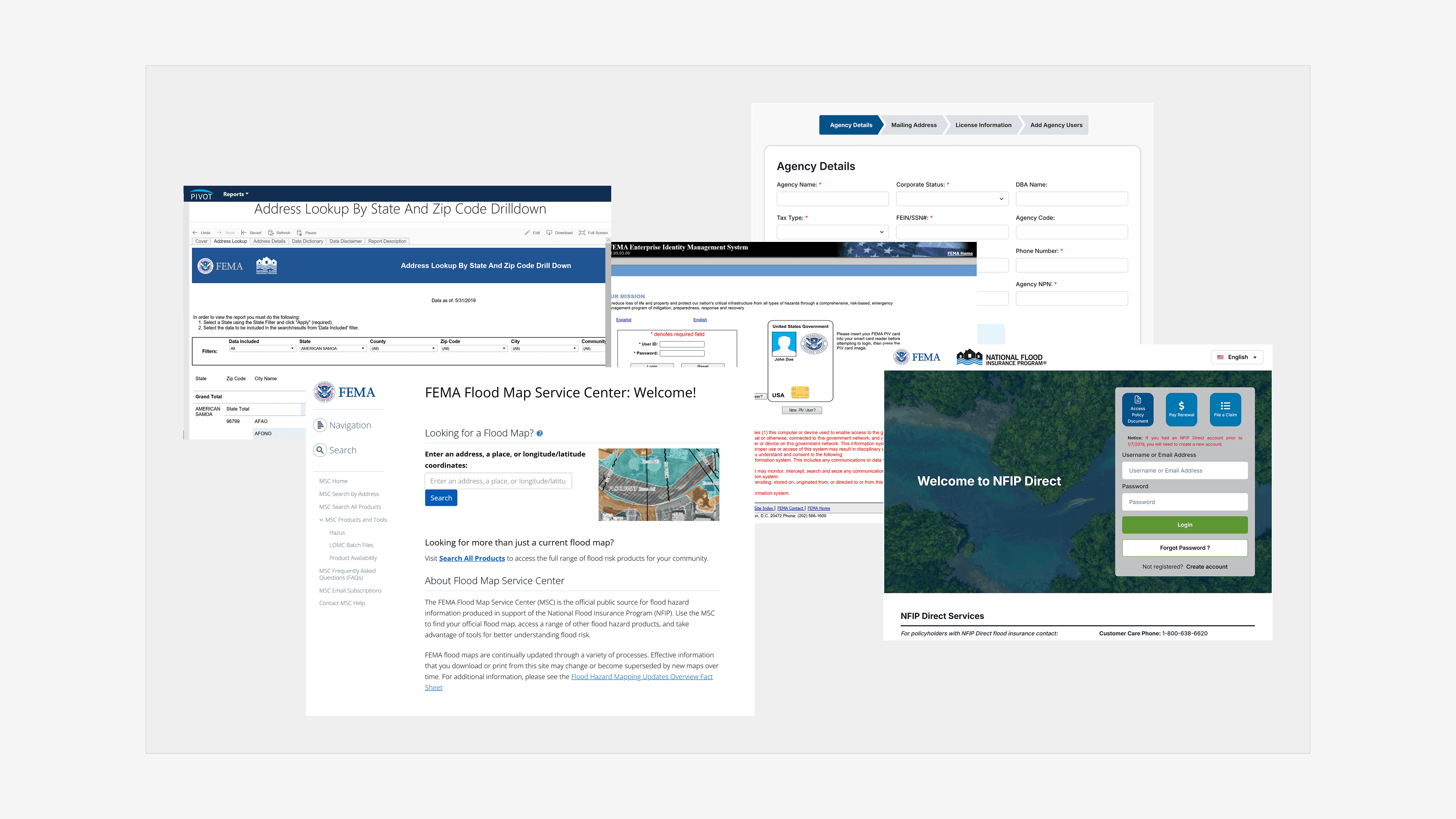
Legacy systems supported policy, claims, reporting, mapping, and compliance across multiple workflows.
Insights
Unreliable data eroded trust before work even began.
Inaccurate or out-of-date information across platforms meant users couldn't rely on what they were seeing, slowing decision-making and increasing dependence on institutional memory to fill the gaps.
"Half the time I don’t trust what I’m seeing because the numbers differ across systems, so I end up verifying everything manually."
— WYO program specialist
Disorganized information structures added unnecessary cognitive load.
Data wasn't grouped in ways that matched how users actually worked, forcing people to spend time locating information rather than acting on it.
Users spent an average of 3–4 minutes locating information before beginning the actual task.
Navigation depended on memory, not structure.
Users completed tasks through internal shortcuts built over years of use. When workflows changed or new staff onboarded, that fragility became a real operational risk.
"I have a cheat sheet I made myself. Everyone on my team does."
— FEMA HQ underwriterEntry friction compounded every downstream workflow.
Users entered the ecosystem through different systems depending on task type, with inconsistent authentication and switching costs that slowed work before it started.
Users encountered an average of 2–3 login or access barriers before reaching their primary task.
Design
Instead of redesigning isolated interfaces, I focused on introducing shared structure across FEMA’s legacy ecosystem to make critical workflows easier to navigate, trust, and scale over time.
The underlying issue was not visual inconsistency alone. Disconnected systems, fragmented ownership, and inconsistent data structures forced users to rely on institutional knowledge rather than clear operational pathways. The redesign introduced more unified navigation, standardized interaction patterns, and centralized access points that reduced friction across policy, claims, reporting, and compliance workflows.
The goal was not simply modernization. It was creating a more resilient operational foundation that could support future change without increasing system complexity.
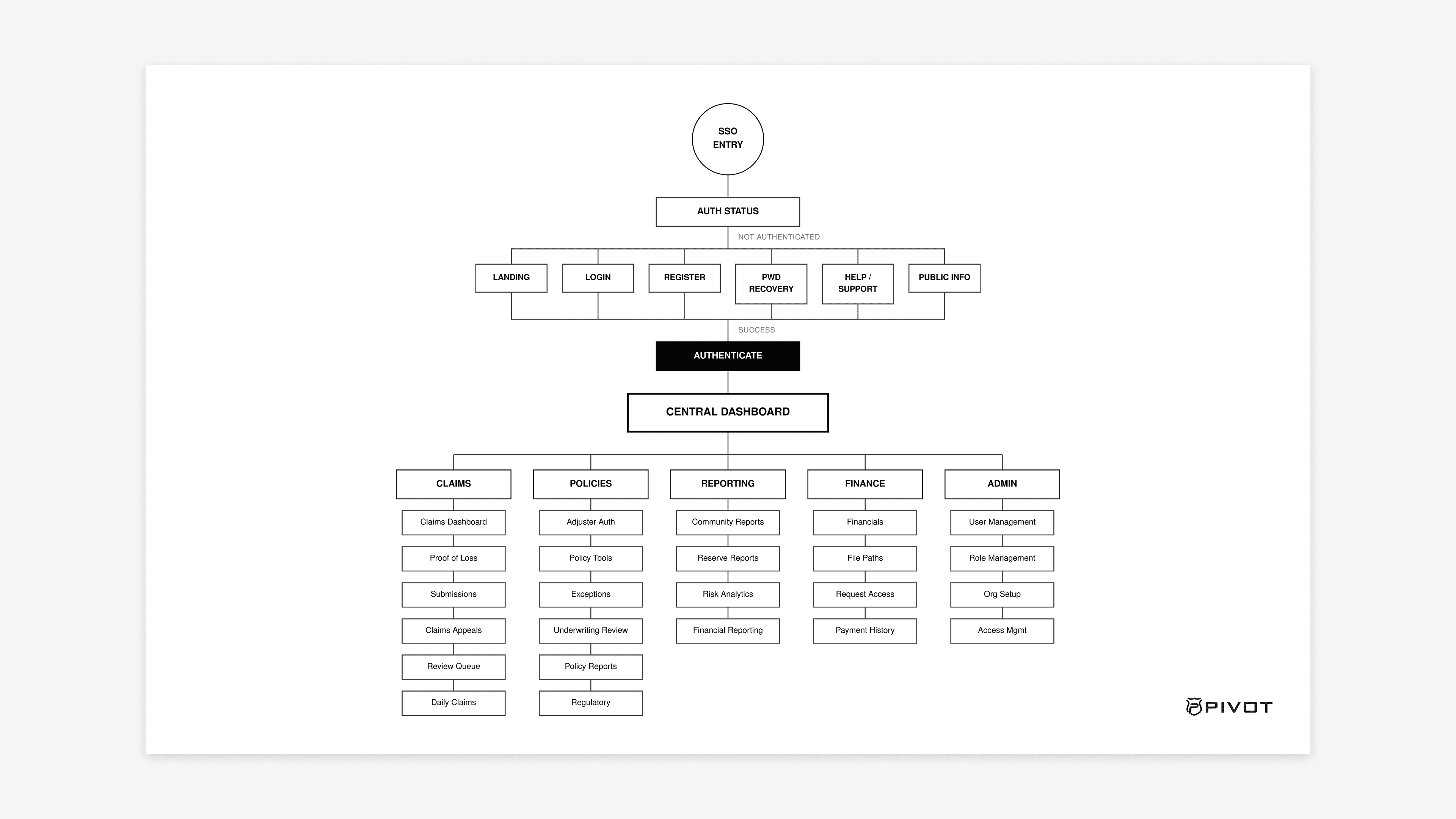
The redesign introduced shared operational structure across FEMA’s fragmented ecosystem, creating clearer navigation pathways, centralized access points, and more consistent system behavior across historically disconnected workflows.
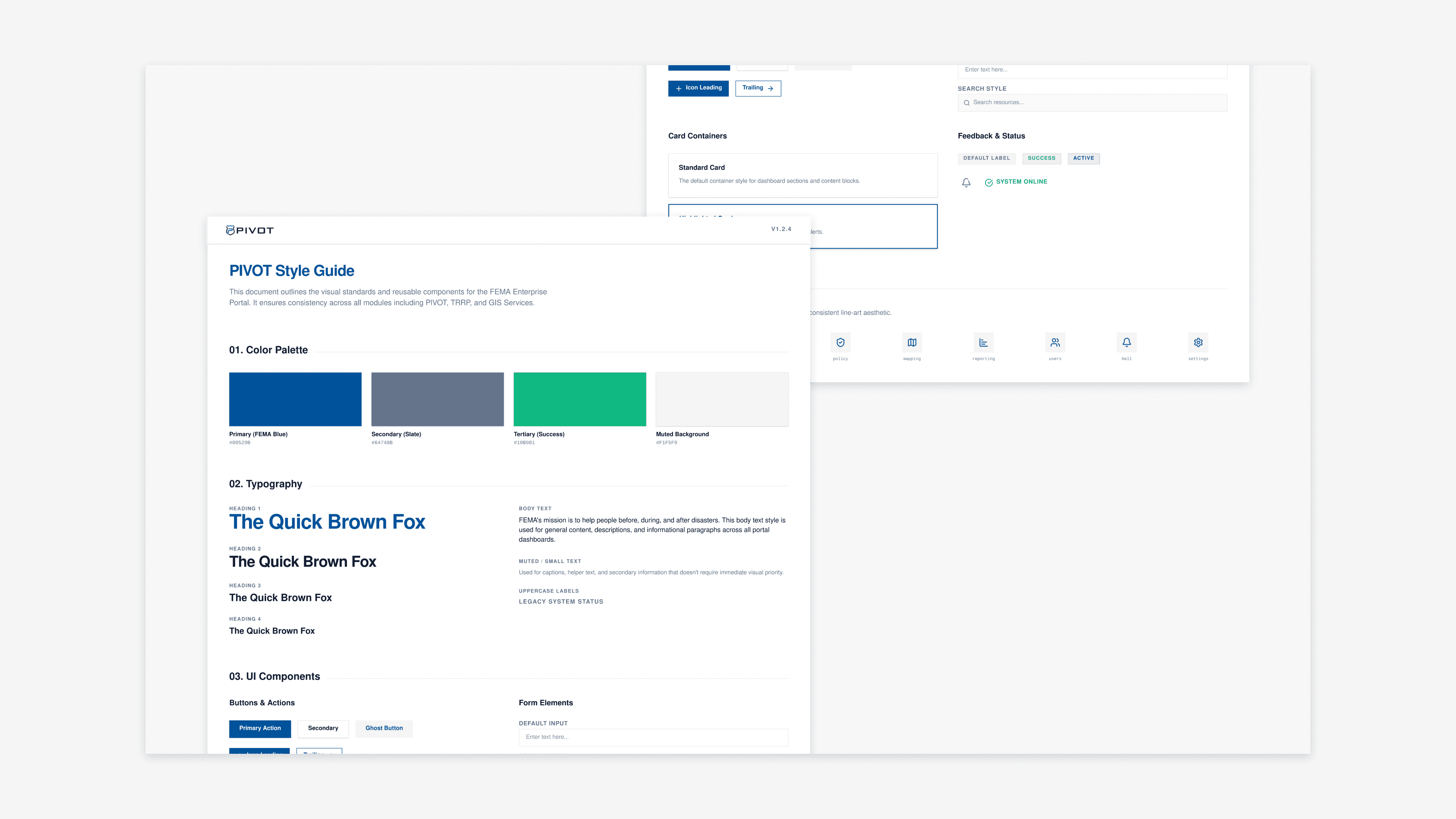
A unified design system established consistent interaction patterns, accessibility standards, and scalable foundations across applications built by different teams, platforms, and legacy constraints.
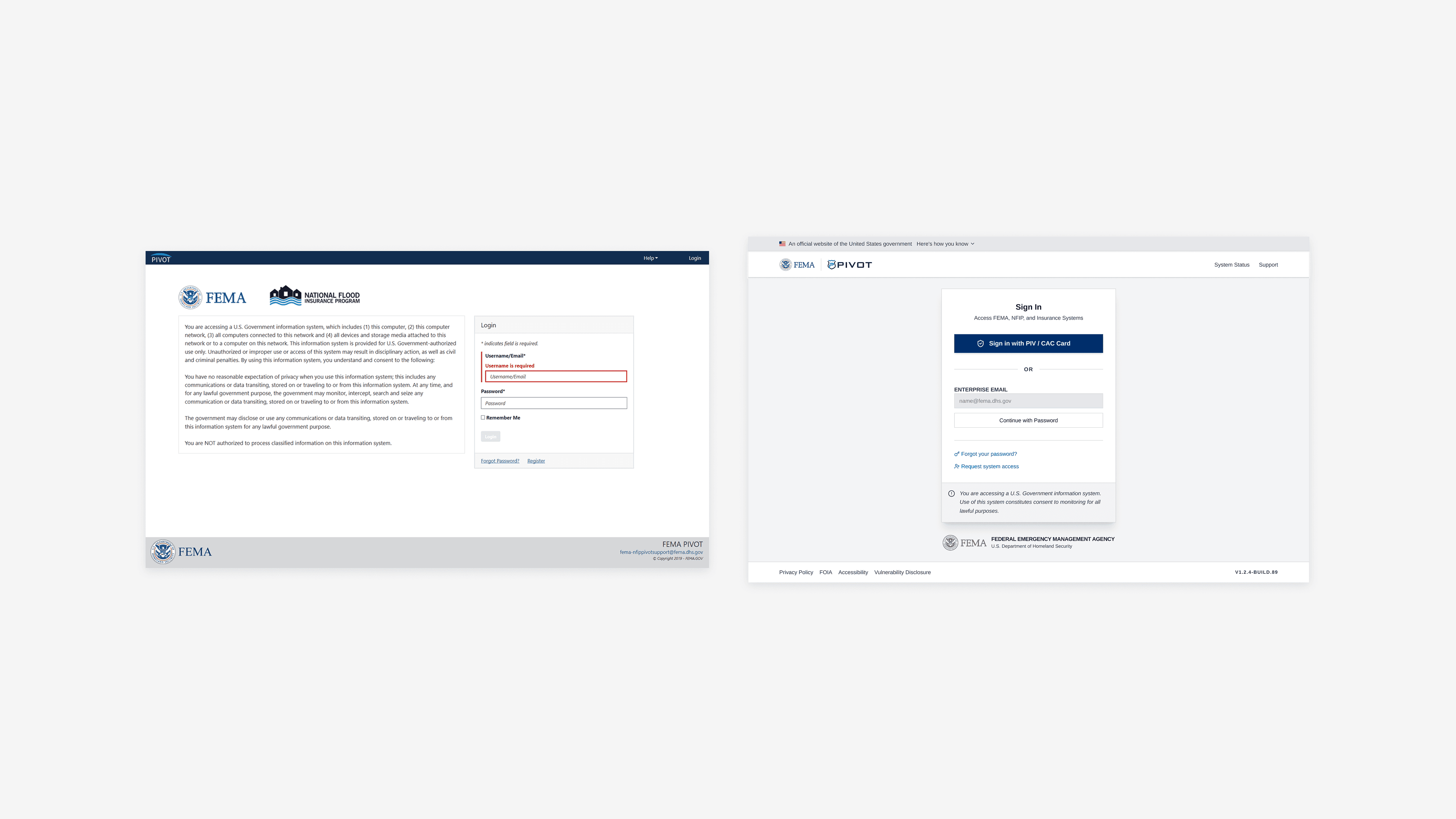
Designed a single sign-on entry point that introduces system access clearly while reducing friction for frequent users
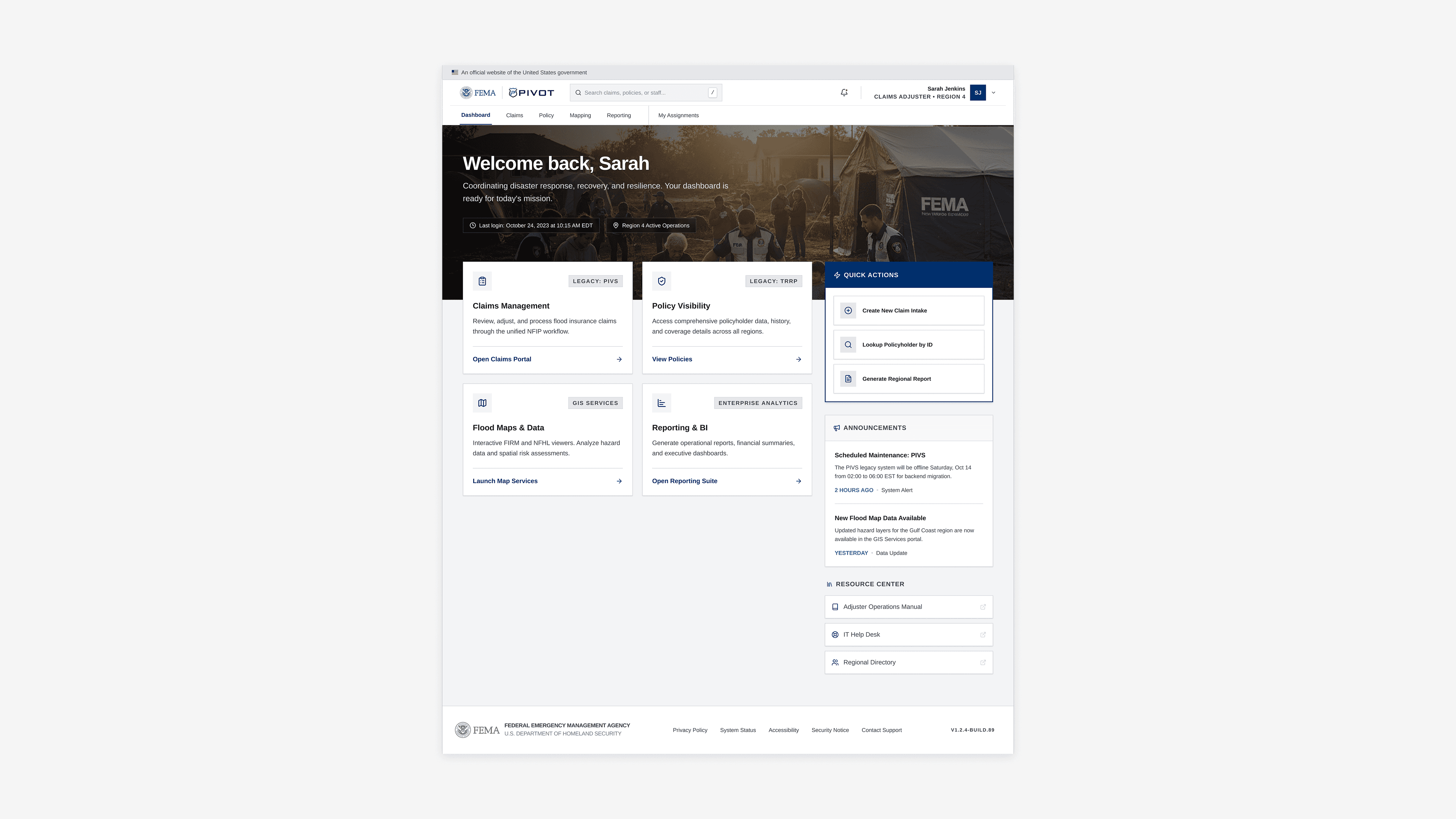
Instead of forcing users to navigate disconnected applications, the platform created a centralized operational workspace.
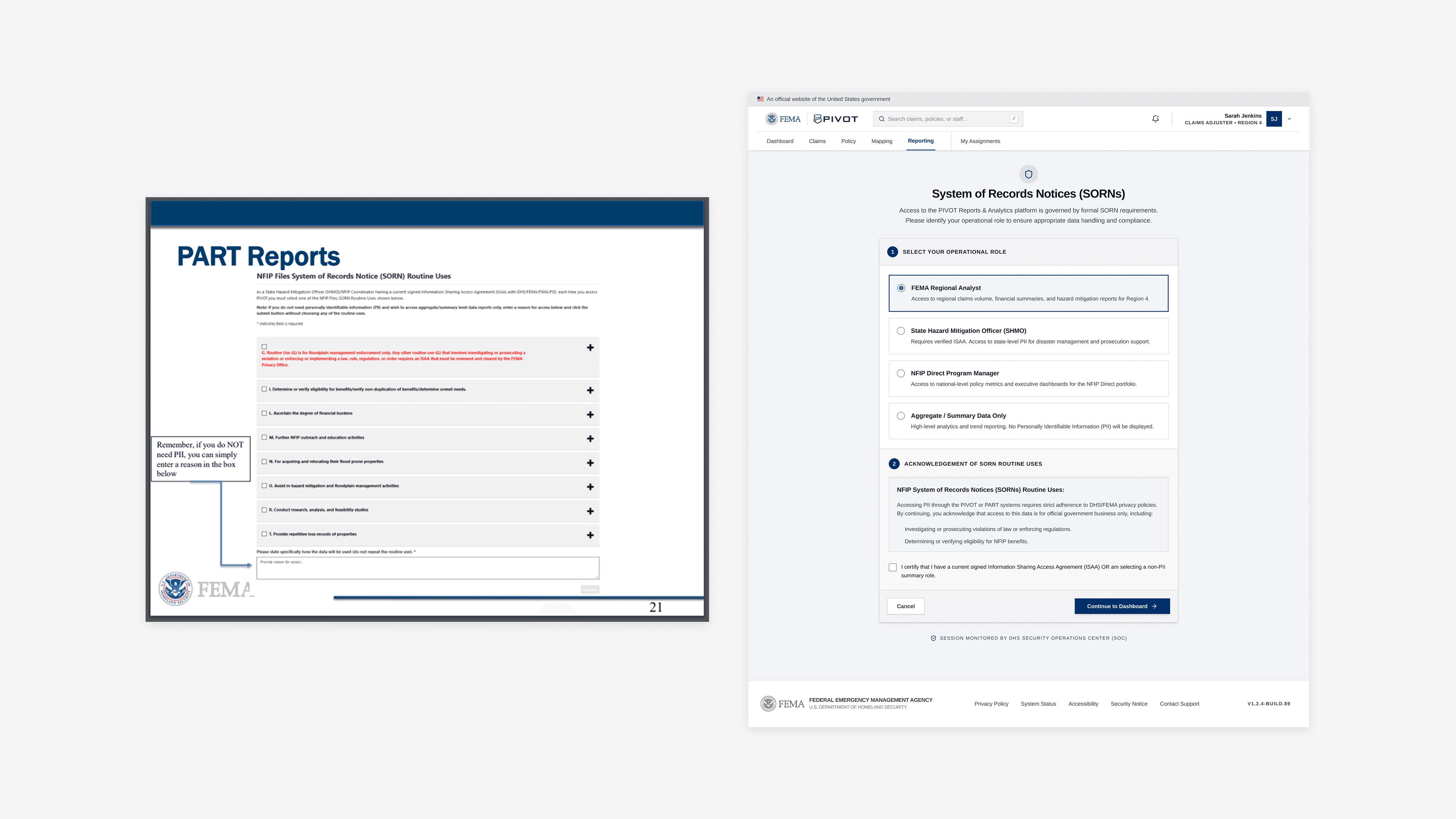
Compliance, permissioning, and access requirements were integrated directly into workflows to support secure handling of sensitive information without disrupting system usability.
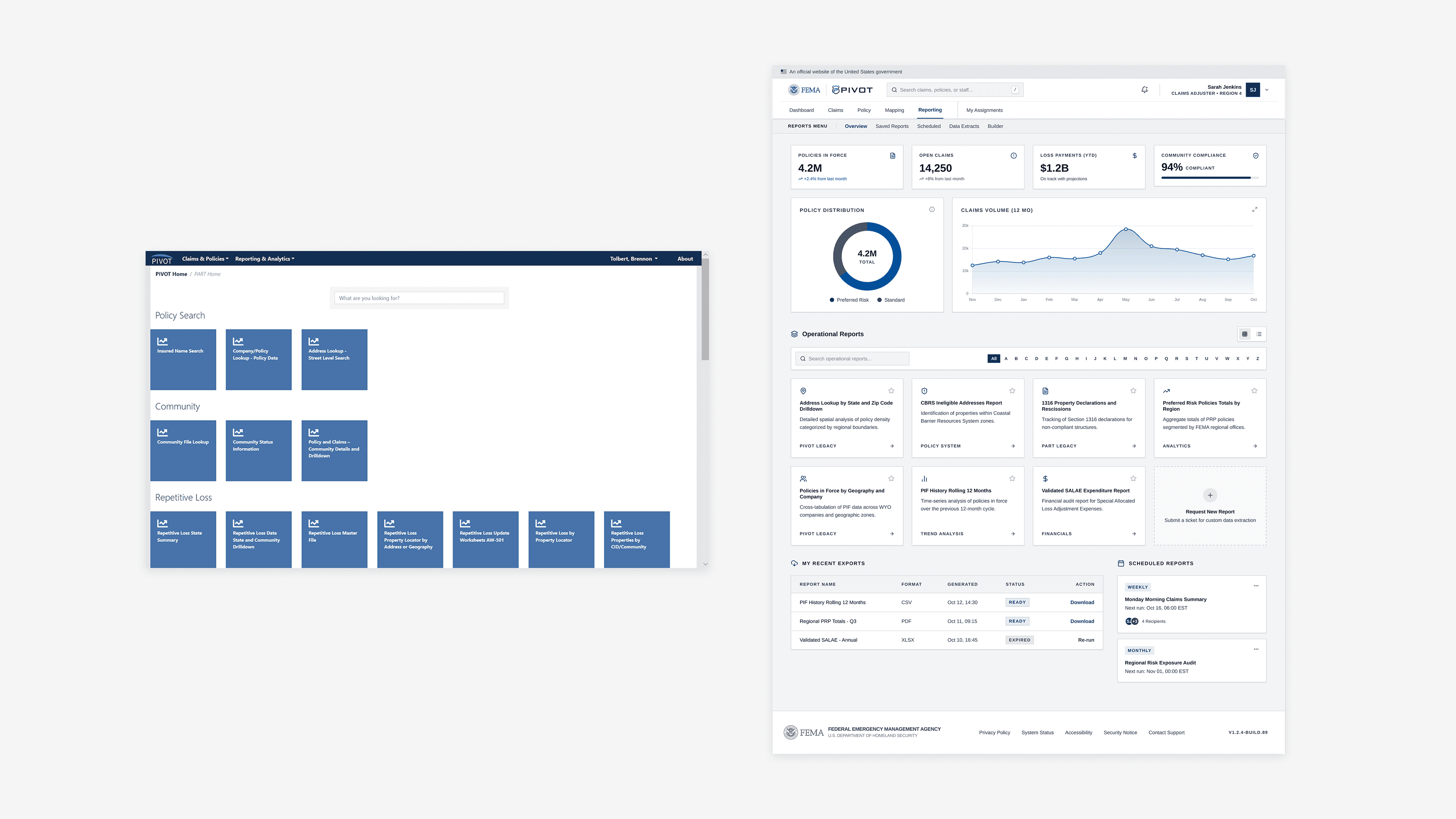
Reporting was consolidated into a centralized workspace that unified analytics, exports, compliance monitoring, and recurring reporting across FEMA’s fragmented systems.
Reporting tools were redesigned around operational visibility and decision support, helping teams identify trends and monitor program activity more efficiently.
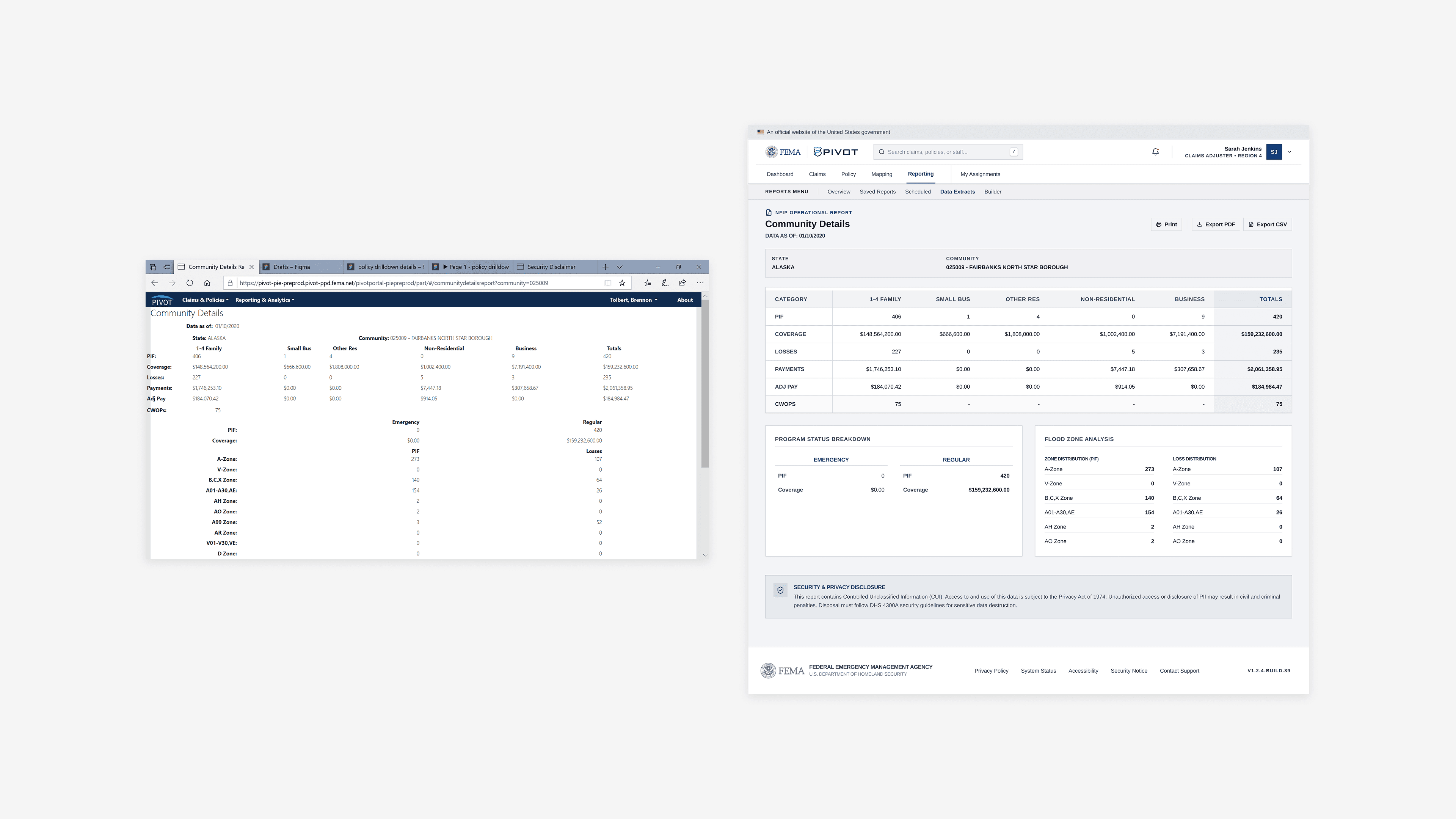
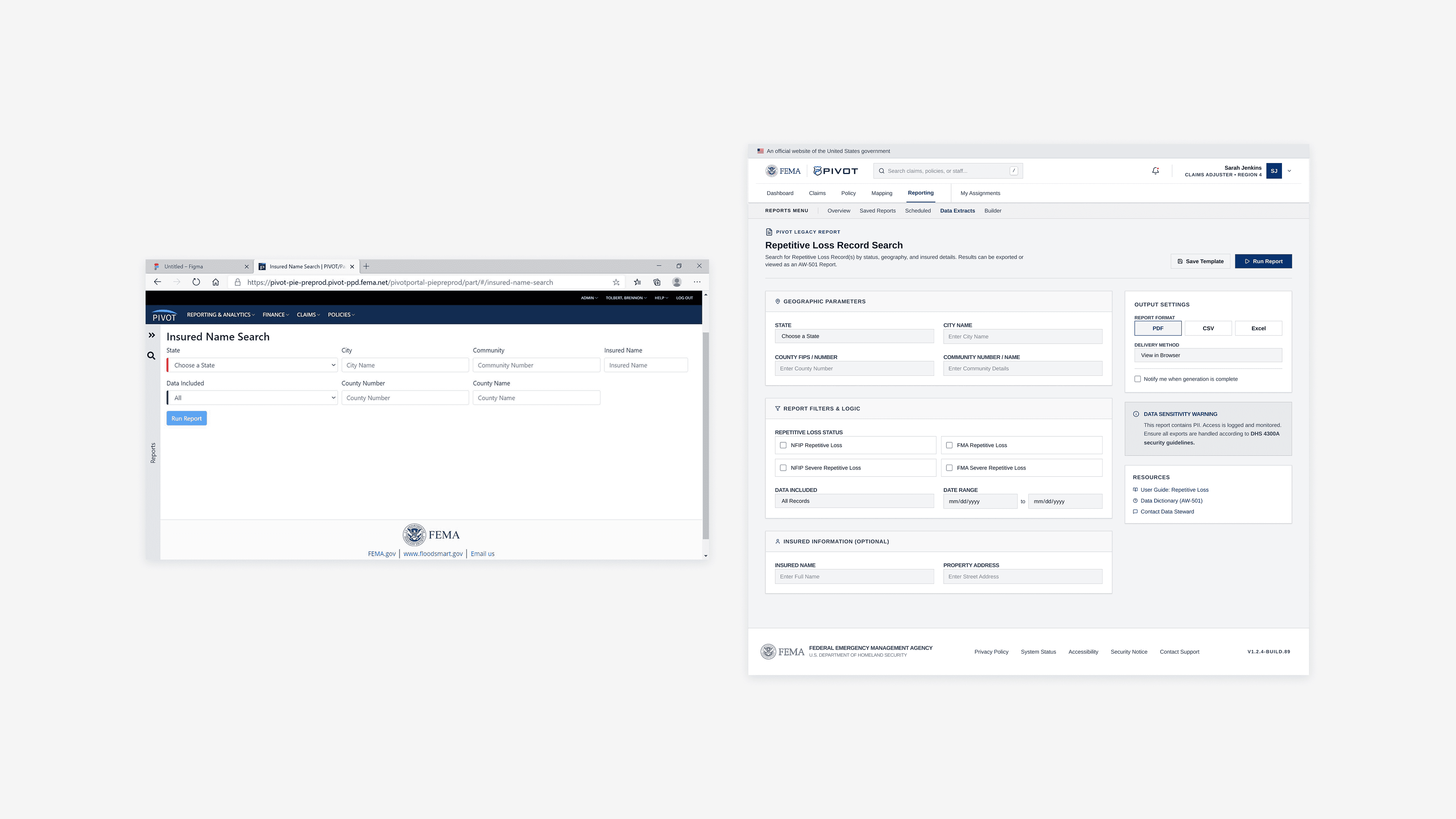
Legacy workflows relied on dense operational tables with fragmented hierarchy and limited usability. All records shown use fully anonymized mock data with no personally identifiable information (PII).
Outcomes
81 System Usability Scale (SUS)
26% reduction in average task time
30+ years of legacy infrastructure modernized
Recognized as the #1 Agile program across DHS
The work improved day-to-day usability while creating a durable foundation for long-term modernization across an ecosystem that hadn't meaningfully changed in decades.
Large government systems rarely improve through a single redesign. The lasting impact came from introducing shared structure where users had previously depended on memory and workarounds, making the ecosystem more trustworthy and far easier to evolve.